
What Are You Actually Paying for in a Mattress? Inside Foam Density, Layers, Thickness & Mattress Lifespan

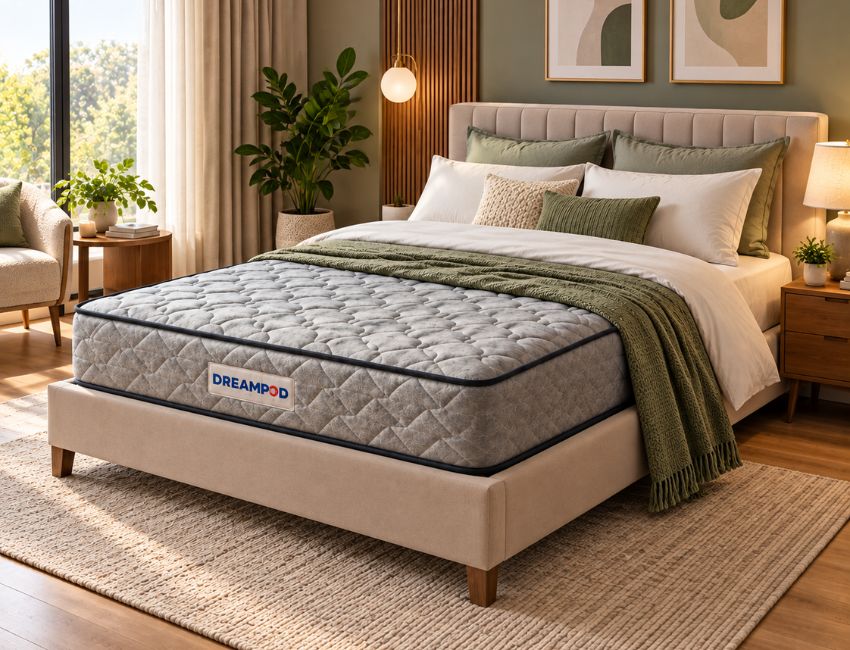
Why can two mattresses of the same size differ so much in price? Two mattresses can look almost identical in a showroom yet have very different prices. The difference often lies beneath the cover in the type and density of foam, how the layers are arranged, the quality of the support core, and how well those materials are expected to hold up over time.
That matters when comparing a memory foam mattress or any other foam mattress. Instead of asking only, “Which one costs less?”, a better question is: What am I getting for my money?
What Does Foam Density Actually Tell You?
Foam density describes how much foam material occupies a given volume; it is not the same as firmness.
Density is commonly expressed in kg/m³ or pounds per cubic foot (PCF). In simple terms, higher-density foam has greater mass per unit volume, although the foam’s formulation also affects what that density represents.
Density can influence how well a foam retains its properties under repeated use and may contribute to its long-term durability. However, density alone does not determine contouring, firmness or comfort. It can also affect manufacturing cost.
But density and firmness are different measurements. A high-density memory foam can feel relatively soft, while a lower-density foam can be formulated to feel firmer.
The comparison also needs context. Density ranges should not be blindly compared between memory foam, HR/polyfoam, bonded foam and other foam types because different formulations have different performance characteristics.
For shoppers, the takeaway is simple: don’t treat a density number as a standalone quality score.
Why Do Mattress Layers Matter More Than They Look?
Each layer has a different job, and the combination determines how the mattress feels and performs.
The comfort layer is closest to the sleeper and primarily affects cushioning, contouring and pressure distribution.
Below it, a transition layer can help bridge softer comfort materials and the firmer support underneath. It can reduce the feeling of sinking too deeply while maintaining cushioning.
The base or support core provides structural stability and helps the mattress retain its overall shape.
So when you’re paying more for a mattress, the additional cost may reflect the type, quantity and quality of materials, the way the layers are engineered together, and other product and service factors.
This layered approach can be seen in the Dreampod Spinecare Orthopaedic Mattress. Its construction combines a memory foam comfort layer with responsive HR foam and a high-density bonded foam base. The different layers are intended to provide complementary functions, including cushioning and contouring from the comfort layer, responsiveness from the HR foam and structural support from the bonded-foam base. That is the kind of construction worth examining when deciding what you are actually paying for.
Does a Thicker Mattress Automatically Last Longer?
No. Total thickness matters, but the materials and proportions inside those inches matter more.
An extra two inches do not automatically make one mattress better than another. A 6-inch mattress with an appropriate construction can be more suitable for one sleeper than an 8-inch mattress with a less appropriate layer arrangement.
Body weight, sleeping position, support requirements and the composition of individual layers all influence what thickness makes sense.
Think about thickness as a construction measurement, not a quality rating. Ask what each additional inch contributes.
What Are You Really Paying For?
The meaningful cost is usually found in material quality, construction, comfort, support and expected service life.
| What You Pay For | What It Does | Why It Matters Over Time |
| Memory foam comfort layer | Cushions and contours | Influences pressure distribution and feel |
| Transition/support layer | Balances cushioning and support | Helps control excessive sinking |
| Base/support foam | Provides structure | Helps maintain mattress form |
| Layer thickness and proportions | Shapes the overall response | Determines how materials work together |
| Cover and purchase terms | Protects materials and adds service value | Affects usability and buying confidence |
This is why comparing two mattresses solely by price can be misleading. One may contain more substantial materials where they matter, while part of another product’s price may reflect different design, branding, distribution, service or construction choices.
When researching Mydreampod, look at the product’s stated materials and construction alongside its purchase terms rather than judging it from the mattress label alone.
Why Do Some Mattresses Develop Sagging or Body Impressions?
Repeated compression can gradually reduce foam resilience, producing permanent impressions and changing how a mattress feels.
Over years of regular use, a mattress can be subjected to thousands of hours of repeated loading and unloading. Over time, some foams can experience changes in height, firmness or resilience as a result of repeated loading, with the extent depending on formulation, construction, load and use.
The result can be a visible body impression or a less supportive sleeping surface. Material formulation, foam density, the underlying support structure, sleeper weight and frequency of use can all influence deterioration.
This also explains why two new mattresses can feel similarly comfortable during a short trial but behave differently after prolonged use.
How Should You Think About Mattress Lifespan?
A mattress’s useful life depends on its construction, materials, usage and care rather than one guaranteed number.
Higher-density foam generally tends to resist deterioration better than lower-density equivalents, but density alone does not determine lifespan.
Sleeper weight, nightly usage, foundation quality, rotation or maintenance practices where applicable, and the complete layer structure can all matter.
Estimated cost per year of comfortable use can be one way to think about long-term value. A mattress that costs more initially may make financial sense if its construction remains comfortable and structurally appropriate for longer. Conversely, paying more does not automatically guarantee better long-term value.
What Should You Check Before Paying More?
Look inside the specification sheet, not just at the mattress’s marketing headline.
Before buying a memory foam mattress, check:
- What materials are used in each major layer?
- Is foam density disclosed where relevant?
- How are comfort and support separated?
- What does the total thickness actually contain?
- What warranty and trial terms apply?
- Is the construction appropriate for your sleeping position and body weight?
For Mydreampod, use the current product information to answer these questions before comparing its price with another mattress.
What to Look for Before Buying a Mattress
The smarter mattress comparison starts with construction, because price alone cannot tell you what is underneath the cover.
A mattress is a system of materials, layers and support not simply a number of inches or a price tag. Understanding foam density, layer purpose, thickness and durability gives you a clearer way to judge whether you’re paying for meaningful construction.
When considering a Mydreampod mattress, explore its current specifications and evaluate what is actually inside before making your comparison. That approach can help you choose based on value rather than marketing alone.
FAQs
Is higher memory foam density always better?
Higher density can improve durability, but density alone does not determine comfort, firmness or overall mattress quality.
Does foam density determine mattress firmness?
No. Density measures material mass per volume, while firmness describes how the foam responds to applied pressure.
Is a thicker mattress better for every sleeper?
No. Appropriate thickness depends on body weight, sleeping position, layer construction and individual support requirements.
How long does a foam mattress last?
There is no universal lifespan; materials, density, usage, sleeper weight, foundation and construction all influence durability.
What should I examine before paying more for a mattress?
Compare its layer materials, density information, construction, thickness distribution, purchase terms and expected long-term value.
 Special Offer:Buy a Double Mattress & Get 2 Free Microfibre Pillows